Money matters in Cambodia
Cambodia, a country in Southeast Asia, is famous for its rich cultural heritage, stunning temples, and beautiful landscapes. For tourists, understanding the local currency, exchange rates, and banking system is essential to make informed financial decisions while traveling. In this article, we provide a practical guide to money in Cambodia, offering key information and useful tips to help you navigate the country’s financial landscape with confidence.
About money in Cambodia
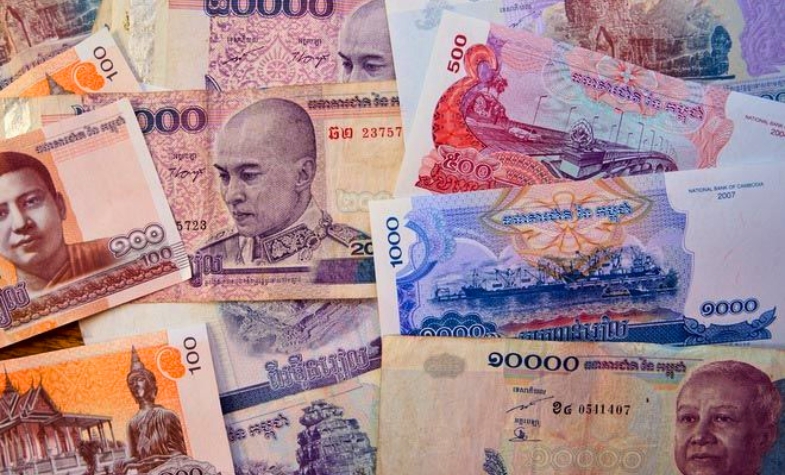
The official currency of Cambodia is the Riel, which comes in denominations of 50, 100, 500, 1,000, 5,000, 10,000, 50,000, and 100,000 riel notes. Coins are no longer in circulation. Among the banknotes, the red 500 riel and 1,000 riel notes are the most commonly used and convenient for daily transactions. Larger notes, such as 50,000 and 100,000 riel, can be more difficult to exchange and are usually accepted only at upscale hotels, fine restaurants, and banks.
Currency use in Cambodia
In addition to the Cambodian riel, US dollars (US$) are widely accepted throughout the country. Most hotels, restaurants, shops, taxis, buses, and airlines set their prices in US dollars. Even visa fees and departure taxes are typically listed in US dollars. In areas near the Thai-Cambodian border, Thai Baht is sometimes accepted, but less so elsewhere. It’s a good idea to carry a mix of US$ and riel notes for everyday transactions and always have enough small bills for minor purchases.
Small transactions (less than $1) are usually paid in Cambodian riel, and change under $1 is given in riel. Carrying small riel notes is useful for motorcycle taxis (motodups), snacks, and other minor purchases. One tip is to use small US dollar bills to buy inexpensive items, such as bottled water or canned drinks, to get real change.
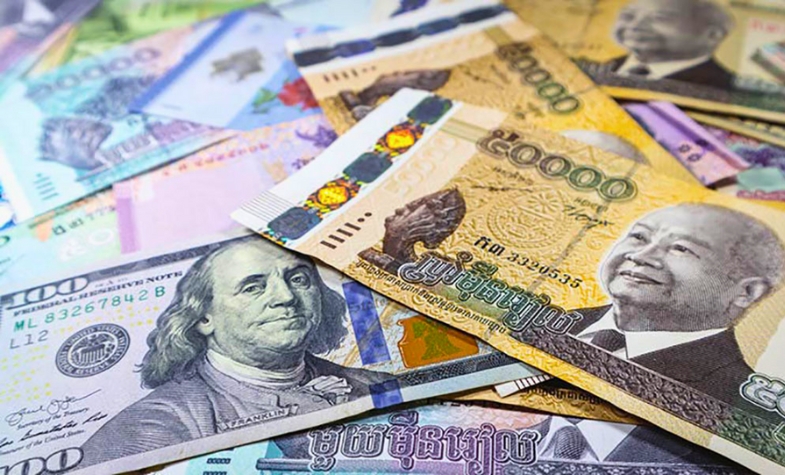
Check your bills before spending to ensure they are not torn or damaged, as shops and restaurants may refuse them. Euros are not commonly used, but you can exchange them, along with many other currencies, at banks and exchange shops.
When exchanging money, avoid changing too much at once to prevent ending up with a large, unorganized stack of notes. Keep large bills separate from smaller notes to make transactions easier and avoid confusion.
Exchange money in Cambodia
The official exchange rate is approximately 4,000 riel to 1 U.S. dollar and 100 riel to 1 Thai baht. It is possible to exchange dollars for riel almost anywhere.
Banks are available in major towns and tourist areas. They offer standard banking services, including cash advances on credit cards, international currency exchange, telegraphic transfers, and traveler’s checks. Most banks operate from 8:00 AM to 3:00 or 4:00 PM, Monday through Friday, with some open on Saturday mornings until 11:30 AM.
While banks can exchange currency, local money changers often offer slightly better rates. Avoid exchanging money on the street, as there is a risk of receiving counterfeit notes or being shortchanged. Traveler’s checks are easier to cash in well-touristed areas but can be difficult to exchange in rural regions. US dollar traveler’s checks are generally preferred. Banks and businesses usually charge around 2% to cash traveler’s checks.
Read more:
ATMs and Credit Cards in Cambodia
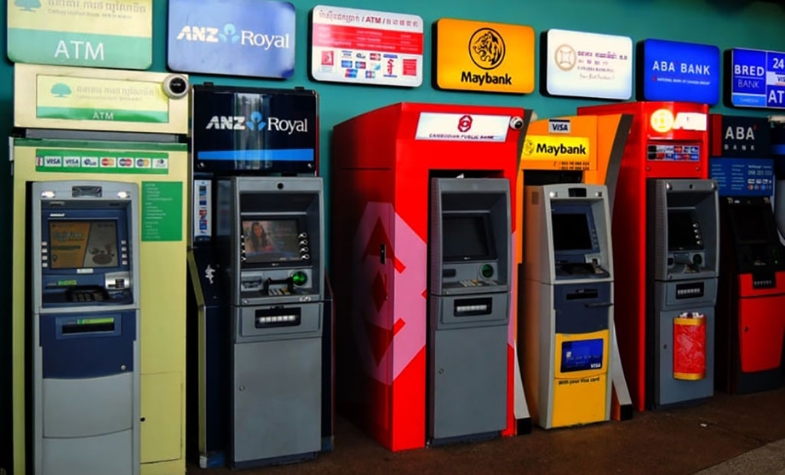
ATMs are available in Cambodian cities, and their number is steadily increasing. Many banks have ATMs, often located inside convenience stores. ANZ Royal Bank and Canadia Bank ATMs accept Cirrus, Plus, Maestro, Visa, and MasterCard, while SBC Bank ATMs accept Visa and MasterCard. You can withdraw either U.S. dollars or riel. Some machines charge a $2 U.S. fee, but many are free of charge.
Credit cards are also increasingly accepted. Most reputable hotels, restaurants, and boutiques accept Visa, JCB, MasterCard, and sometimes AMEX. Cash advances are available at some banks in Phnom Penh, Siem Reap, Battambang, and Sihanoukville. Most businesses charge a 2% – 4% fee for credit card transactions
Costs in Cambodia
While visiting Cambodia is relatively cheap by Western standards, it is somewhat more expensive than neighboring countries. This is partly due to Cambodia’s reliance on the U.S. dollar and the fact that many products are imported.
The highest expenses are typically entrance fees for tourist sites, followed by food and drinks. Meals start at around US$4 at inexpensive places, rise to about US$10 at mid-range restaurants, and can reach US$50 or more if you splurge on the wine list.
Beer costs between US$1.50 and US$2.50 in bars, and slightly more in discotheques. Cheaper options are available at local venues with a lower standard.
A daily budget of US$100 allows access to good hotels and restaurants, while those who can spend US$200 per day can enjoy a more luxurious experience.
Bargaining in Cambodia
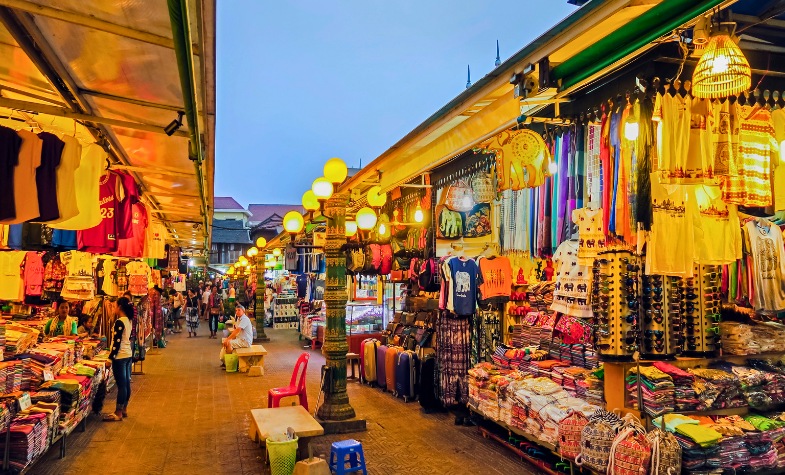
Bargaining is common in most shopping places in Cambodia, except supermarkets and department stores. In Asia, ‘saving face’ is important, so negotiations should always be polite and good-natured. Smile, stay calm, and avoid getting angry or arguing. Bargaining is not just about making a deal - it is also considered a cultural art of living and applies equally to both locals and tourists.
Discounts can vary. In some cases, you may get 20–30% off or more, while other times only around 10%. Once the money is accepted, the deal is considered final. Don’t be upset if someone else gets a better price; focus on paying a price that feels right for you.
Tipping in Cambodia
Tipping is not compulsory in Cambodia, but it is highly appreciated and can make a big difference for service providers. If you are happy with the service you receive, giving a tip is appropriate. It provides excellent service and is an established part of the tourism industry.
Some hotels or restaurants may include a 5% service charge on your bill, but this money often does not go directly to the staff. If you wish to reward good service, it is best to tip the recipient directly.
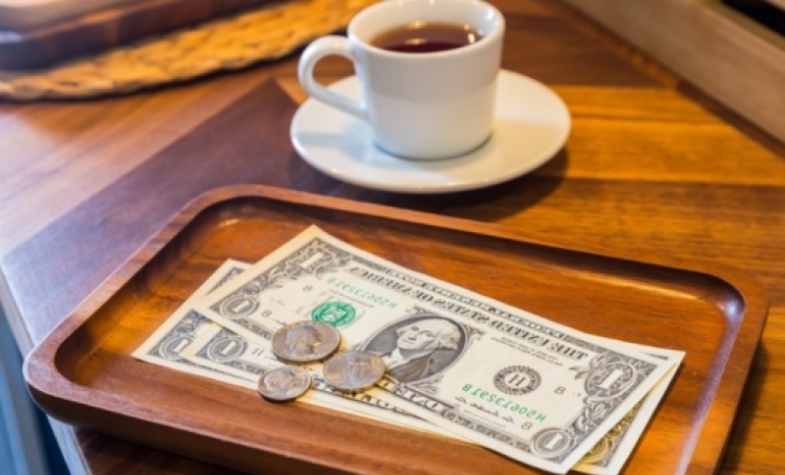
Suggested tipping amounts:
-
Local restaurants: Single diners can tip around US$1. In up-market restaurants, 10–15% of the bill is customary. For groups, a total of US$4–5 is appropriate, depending on group size.
-
Drivers: US$5 per day for a single traveler, or US$10–15 for the whole group.
-
Tour guides or group leaders: Tips depend on the service provided. A reasonable range is US$5–7 per day for individual travelers, or US$2–4 per person on a group tour.
Ultimately, tipping is a personal choice based on service quality and the length of your trip. There is no fixed amount in Cambodia, and no one will be offended if you choose not to tip. However, leaving a dollar or two is common and generally appreciated. The gratitude of the recipient is often visible in their warm smile.
Traveling in Cambodia can be a rewarding experience, not only for its stunning temples and rich culture but also for its accessible financial system. By understanding the local currency, banking options, ATMs, credit cards, and typical costs, you can manage your money confidently, practice polite bargaining, and leave small tips when appropriate. Following these simple tips will help you enjoy Cambodia comfortably and focus on exploring its vibrant culture and beauty.
Related tours for you:
***
Travel Authentic Asia Company is your best choice for discovering the beauty of Southeast Asia. Our experienced and knowledgeable travel advisors are committed to helping you create a tailor-made tour and extraordinary experiences in this majestic region.
If you're looking for an authentic cultural experience, do not hesitate to contact Travel Authentic Asia to choose a Cambodia tour, Southeast Asia tour package or to customize your own style tour to South East Asia.

.jpg)
.jpg)




 Travel Authentic Asia - All rights reserved